
To complement the launch of the upcoming Future Homes Standard (FHS), the UK Government is undertaking a major reform of the Energy Performance Certificate (EPC) system to make it more accurate, transparent and aligned with national net‑zero goals. A partial government response to the Energy Performance of Buildings (EPB) consultation (published in January 2026) outlines significant upcoming changes for both domestic and non‑domestic EPCs.1
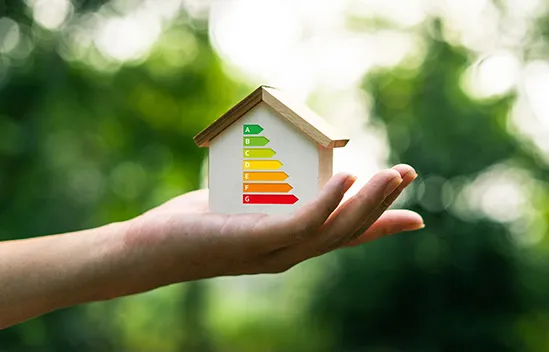
Why the EPC Process is Being Reformed
The existing EPC model has long been challenged across the industry. The traditional A–G rating heavily depends on modelled fuel costs, often failing to reflect real fabric performance or actual thermal efficiency. This oversimplification has led to EPCs being seen more as a compliance tick‑box than a meaningful diagnostic tool.2
Government EPC reforms aim to:
- Improve the accuracy and usefulness of EPCs as a tool for energy planning.
- Support households and landlords in reducing bills through better-targeted improvements.
- Align EPC metrics with net‑zero commitments and the Warm Homes Plan.1
- Create clearer interactions with MEES (Minimum Energy Efficiency Standards), which are expected to tighten to EPC C by 2030 for many property types, including rental.3
What’s Changing in the EPC Process?
By October 2026, domestic EPCs will move from a single rating to a multi‑metric format. The new assessment will report four headline metrics:
- Fabric performance (thermal retention, insulation, etc)
- Energy cost rating (realistic cost predictions)
- Heating system (fuel type and carbon impact)
- Smart readiness (PV, battery storage, smart controls, and others)
These metrics will be supported by additional indicators such as energy demand and carbon emissions. The new system will be powered by the Home Energy Model (HEM), replacing the ageing SAP methodology.4 When the FHS launches during Q1 this year, the SAP methodology will continue to be used for a short time until the launch of HEM takes place after an approximately three-month delay.
For non‑domestic buildings, the carbon metric will remain the primary focus, maintaining continuity while wider reforms continue. EPCs will still be valid for 10 years, though the government continues to review whether EPCs should be renewed earlier in sales and lettings processes.4
What This Means for Installers and Specifiers
For installers, the shift to an EPC assessment process led by fabric and performance metrics has the potential to create a clearer pathway for recommending high‑impact, fabric‑first interventions - particularly insulation and heating upgrades. For specifiers and housebuilders, multi-metric EPCs will offer more granular data to guide design decisions, improve specification accuracy and demonstrate compliance.
It’s predicted that this narrower focus will mean even the smaller improvements can combine to result in major impact to a building’s thermal performance and be better recognised in the overall EPC rating.
Most importantly, EPCs are transitioning from a static grading system to a more practical planning tool, enabling the industry to deliver higher‑performing, future‑ready homes and buildings.
What’s Next for the EPC Reform?
Consultations and finalisation of the reformed EPC process are still ongoing, and we can expect more news on exact compliance criteria later in the year. Drayton is keeping a close eye on developments and their impact upon customers.
We're also committed to promoting the benefits of heating controls as cost-effective means of helping the UK achieve its net zero targets - highlighted in our recent MACC analysis that demonstrated that Drayton's most popular smart and traditional controls proved up to six times more cost-effective than fabric-based loft and solid wall insulation methods.
1 [gov.uk]
Related Reading



Drayton stockists near you
Are you an installer?
Check out Drayton Rewards+, our new and improved loyalty scheme that gives you more. Sign up free now to start earning points and access free training!
Sign up today